
Street Karting in Tokyo with Your Coworkers: 7 Common Pitfalls on Team Outings and How to Avoid Them
Street Karting in Tokyo with Your Coworkers: 7 Common Pitfalls on Team Outings and How to Avoid Them
It's Friday evening. Someone drops a quick message in the team chat: "How about go-karting for next month's outing?"
A few seconds later, the reactions pile up and the plan comes together in no time. Up to this point, it's honestly easy!
The hard part comes next. If you've been to Tokyo a few times, you've probably already seen Asakusa and the Shibuya crossing. So when your team outing calls for "something different from last time," street karting comes up as an obvious choice. Going with coworkers, though, brings a few pitfalls you don't hit when you go alone or with close friends. The group is bigger. People speak different languages. And you often meet up right after work. That's a lot of pitfalls stacked up at once.
This article narrows those moments down to seven. You can avoid every one of them with a bit of planning ahead. Let's go through them together.
Three Pitfalls at the Booking and Headcount Stage
The first hurdle shows up before anyone gets in a kart. This is probably also where the organizer gets the most nervous.
The first pitfall is booking timing. Team outings tend to land on weekends, and Saturdays and Sundays are known to fill up fast. You wait until "everyone's schedule lines up" before booking, and by then the slot you wanted is gone. Just picturing it is enough to make you shudder. Once you've narrowed the dates down to two or three options, start inquiring. You'll save yourself the last-minute rush later.
You can book through Facebook, LINE, or email (booking@streetkart.com). Also, decide up front who in the team chat will handle the communication. Everyone assuming "somebody must have taken care of it" is a classic team event trap!
Another easy thing to miss is the store name. There are seven locations in Tokyo, but Akihabara No. 1 and No. 2 are right next to each other, as are Shibuya and Shibuya Annex. The names are similar too. When you send out the details, share the exact official name of the store you booked with everyone. That alone ends the "wait, which one was it?" confusion on the day.
The second pitfall is the organizer checking everyone's driver's license alone. Street Kart runs on public roads, so participants have to meet driver's license requirements. The tricky part is that what you need depends on the type of license and the country that issued it. If your team is a mix of people from the US, Europe, and Asia, what each person needs may be different.
If the organizer tries to research everyone's situation at once, something will slip through. A better approach is to post a link to the official website in the chat and ask, "Please check the license requirements yourself and react once you're good to go." Check the official website for the detailed requirements. On a team outing, nothing matters more than making sure nobody turns pale on the morning of the event, realizing, "My license doesn't qualify..."!
Also make sure everyone knows they need their original physical license. Digital licenses aren't accepted, and the company states that anyone who doesn't have the required documents on the day can't take part and won't get a refund. Also, the karts are single-seaters, so passengers aren't allowed. You can't invite a coworker without a license to "just ride along with you." Plan another way for that person to join in, such as meeting up for dinner after the drive. Making someone feel left out is the last thing you want on a team outing.
The third pitfall is assuming your group will get to drive on its own. Street Kart runs guided tours with a guide in the lead. Before you build your plan around driving with only your own group, ask about it when you book. Check the official website for details. Rather than planning around inside jokes without knowing how things will go, make a plan that works either way. As the organizer, you'll feel a lot more relaxed.
This matters even more for large teams. A standard tour is made up of up to six drivers and one guide, and the company says larger groups are split into several groups at the Tokyo Bay location. If you had pictured the whole team driving in one long line, check this early. For the latest conditions on group sizes, see the official website or contact the company.
Are You Choosing a Location Only by How Close It Is to the Office?
The fourth pitfall is choosing the location. Organizers tend to go with "whichever is closest to the office." Hold on a second, though. Each Tokyo location drives through completely different scenery. If many people on your team have been to Tokyo several times, this is where your plan wins or loses!
Each course follows a fixed route, and you drive behind a guide. That's exactly why the course you pick decides which Tokyo you see that day.
The Akihabara courses include routes where you can see the red-brick Marunouchi building of Tokyo Station and the Wako clock tower at the Ginza 4-chome intersection. You pass through Marunouchi and Ginza, where you walk around in a suit on weekdays, from a completely different angle. Doesn't that sound like a wonderfully fitting pairing for a team outing?
From the Shibuya locations, you get the Scramble Crossing, the zelkova-lined avenue of Omotesando, and Takeshita Street in Harajuku. You'll be revisiting places you probably walked through on your last trip. Even the same intersection should look quite different when you see it from the road instead of the sidewalk.
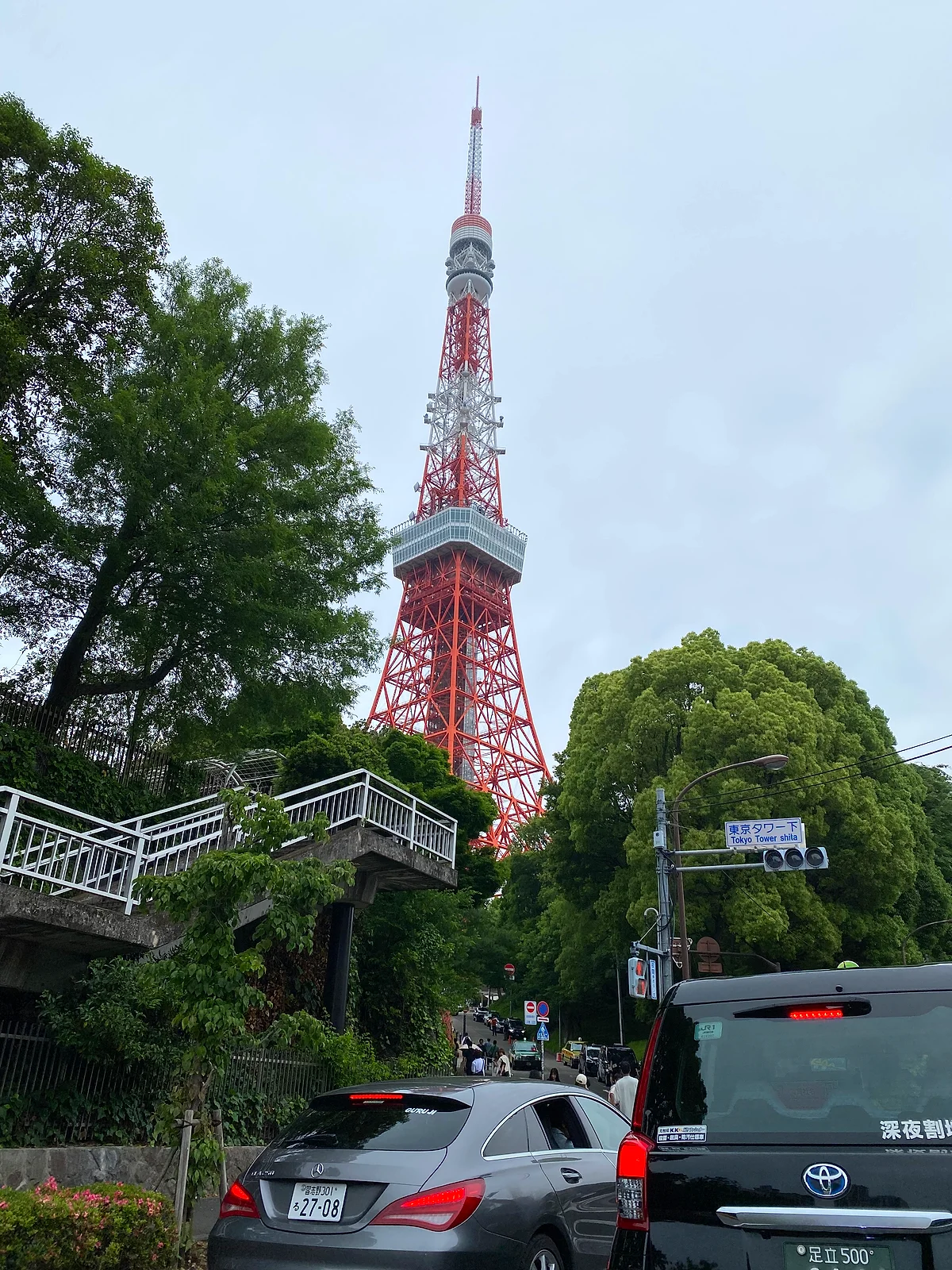
Along the routes from the Shinagawa and Tokyo Bay (Shinkiba) locations, the waterfront scenery opens up, with Rainbow Bridge and Tokyo Tower. Rainbow Bridge is 798 meters long and is lit up in seven colors at night. The routes also pass the high-rises around Shinagawa Station and the Shibaura office district, which makes them an interesting option for teams that want to see another side of "the Tokyo we work in every day."
If your team is meeting after work, keep in mind that the company says the Tokyo Bay course offers night views on evening slots. Wrapping up the day with the red-and-white Tokyo Tower and the glowing Rainbow Bridge in view is something you rarely get in a meeting room. Check whether your preferred time slot is available when you book.
By the way, the stores have no parking. Add a line to your invitation asking everyone to come by public transit. For reference, the Shinagawa store is about a 3-minute walk from Keikyu's Kita-Shinagawa Station, the Shibuya stores are about a 5-minute walk from Shinsen Station on the Keio Inokashira Line, and the Tokyo Bay store is about an 8-minute walk from Shin-Kiba Station.
Don't Leave the Language Barrier to "Someone Will Figure It Out"
The fifth pitfall is language. On tour day, instructions are generally given in English. Guidance in Japanese or other languages depends on the staff that day and isn't guaranteed.
If your team has many international members, English instructions will likely feel reassuring. The case to watch out for is the opposite one: when you have Japanese coworkers who aren't very confident in English. If they show up assuming "they'll explain it in Japanese," they may end up starting to drive without fully understanding the pre-departure briefing.
The fix is simple. Pair each of them in advance with a "buddy" who is strong in English. The buddy quietly fills in anything they missed during the briefing. That small step makes a huge difference to how comfortable they feel. If language is a real concern, ask about it when you book.
The official website is available in 22 languages. However, being able to read the website in many languages isn't the same as getting instructions in that language on the day. Make sure your team doesn't mix the two up.
One more suggestion. If the organizer only asks the whole group "Any questions?" after the briefing, no hands may go up. Try making eye contact with each person and asking, "Are you okay so far? (Daijōbu?)" That extra step should help you catch the "actually, I didn't get it" that people find hard to say.
Along with language, something coworkers from overseas often overlook is that Japan drives on the left. While driving, you're expected to follow Japanese traffic rules and the guide's instructions. For anyone who usually drives in a right-hand-traffic country, a quick "In Japan, we drive on the left" before departure should help the briefing sink in.
Street Karting in Tokyo: Dress and Packing Tips So You Have No Regrets
The sixth pitfall is showing up in your office clothes. Team outings are often scheduled for after work on weekdays. People arrive in suits, slim skirts, or heels, and only realize the problem when it's time to climb in. This really does happen a lot.
Avoid heels, skirts, and open-toed shoes, and plan on comfortable clothes and closed-toe shoes such as sneakers. For anyone coming straight from the office, send a reminder the day before: "Bring a full change of clothes." That's what a thoughtful organizer does! Travel light. Storage for large items like big work bags or suitcases is limited, so check in advance if you're unsure. For the detailed dress code, the official website's guidance is the most reliable source.
Reading the season matters too. Tokyo summers can get dangerously hot in some places, especially out on the road with no shade. Take hydration and heat protection seriously. In winter, on the waterfront routes from the Tokyo Bay and Shinagawa locations, the wind off the sea may feel colder than you expect. Something to keep your neck and hands warm will leave you free to enjoy the view. Check how tours are handled in different weather in the booking information or on the official website.
As for rain, the company says tours run as scheduled in light to moderate rain with raincoats provided, and are canceled in heavy rain or typhoons. If a tour is canceled, you can choose to reschedule or get a refund. If you're planning during the rainy season or typhoon season, agree on backup dates within the team ahead of time so you don't have to redo the whole scheduling process from scratch if it comes to that.
Save the Toast for After the Drive
The seventh pitfall is the order of events. When people think of a team outing, they tend to pair it with a nomikai (drinking party). But this is the one point where there's no room for compromise. Street karting means driving a vehicle on public roads. Japan is extremely strict about drunk driving, so assume that even a small amount is not okay. A toast with beer before getting in the kart is out of the question.
Drive first, then take your time with the toast. That's the golden rule!
The same goes for smartphones. Don't try to take photos or video while driving. Group photos before you set off or after you get back are plenty. If you pick one person as the team photographer, everyone else can stop worrying about their phones.
Planning where to go after the drive based on your starting location also keeps things flowing. Around the Shibuya stores, Dogenzaka Ramen Yokocho and Shibuya Niku Yokocho are about a 10-minute walk away. From the Akihabara stores, Kanda Myojin Shrine is about a 10-minute walk. Take a short stroll, enjoy the air of the shrine grounds, then have dinner at Tonkatsu Marugo. That's a nice way to wrap things up. From the Shinagawa store, Tennozu Isle is about a 20-minute walk, perfect for walking along the canals and reliving the excitement together. From the Tokyo Bay store, you could also stop by CASICA, a café and restaurant near Shin-Kiba Station, before heading home.
Deciding how to split the cost ahead of time also makes the day much easier. Prices vary by season and time of day, so check the latest rates on the official website.
The company says full payment is made in advance, and several people can pay separately through the same PayPal link. Before posting the link in the chat, decide whether the organizer will cover everyone and collect later, or whether each person will pay for themselves. There are also insurance plans with different levels of coverage. For a company outing, agreeing on a plan as a team beforehand saves each person from deliberating at the front desk. Also let everyone know that reckless driving may void the coverage.
Why People Choose Street Kart
So far, I've covered nothing but pitfalls. To finish, I'll add just two things I haven't mentioned yet.
The first is the experience of riding a kart itself. Every time you stop at a light, you'll feel the buzz of the intersection and the temperature of the wind up close.
The second is the track record. As of November 2023, Street Kart had run over 150,000 tours, served over 1.34 million customers, and earned an average rating of 4.9 out of 5 from over 20,000 reviews.
Once You've Covered These 7, All That's Left Is Picking a Date
Booking, licenses, assuming your group will drive on its own, choosing a location, language, clothing, and the order of the toast.
Discover any of these on the day itself and it's too late. But if you know about them in advance, each one can be handled with a single line in the chat.
Weekends fill up fast, so get moving as soon as you have candidate dates. Start by getting a feel for the locations and routes on the official website, then reach out through Facebook, LINE, or email.
The Tokyo you walked on your last trip, seen this time from road level, with your coworkers.
Now it's your turn to post in the chat!
This article was originally written in Japanese and translated using AI. Some expressions may read unnaturally, and we appreciate your understanding. For the most accurate and up-to-date information, please refer to the official site at kart.st.
Street Kart is not affiliated with Nintendo or the Mario Kart series in any way. We do not provide costumes of Nintendo characters, and such costumes may not be worn during tours even if brought by participants.