
Deepen Your Tokyo February Valentine Strolls: Winter Scenery and the Joy of Street Kart Experiences
February in Tokyo is remembered for its cold, but it’s also a time when the city’s true character comes into sharper focus. The air tends to be relatively clear, so the nighttime lights and the outlines of buildings feel crisp and defined. Even in central areas like Shibuya and Omotesando, it becomes easier to enjoy the scenery that only this season offers. When you add the decorations and events of the Valentine season on top of that, the very act of walking through the city takes on a seasonal feeling.
For anyone searching how to spend their trip around “Tokyo February Valentine,” the events aren’t the only thing that matters. The impression of the same Tokyo can change dramatically depending on which neighborhoods you move through, how you travel, and in what order you take in the views. There’s the option of strolling slowly on foot, and there’s the option of moving while feeling how the city connects together. One of those options is a street kart experience, touring public roads led by a guide.
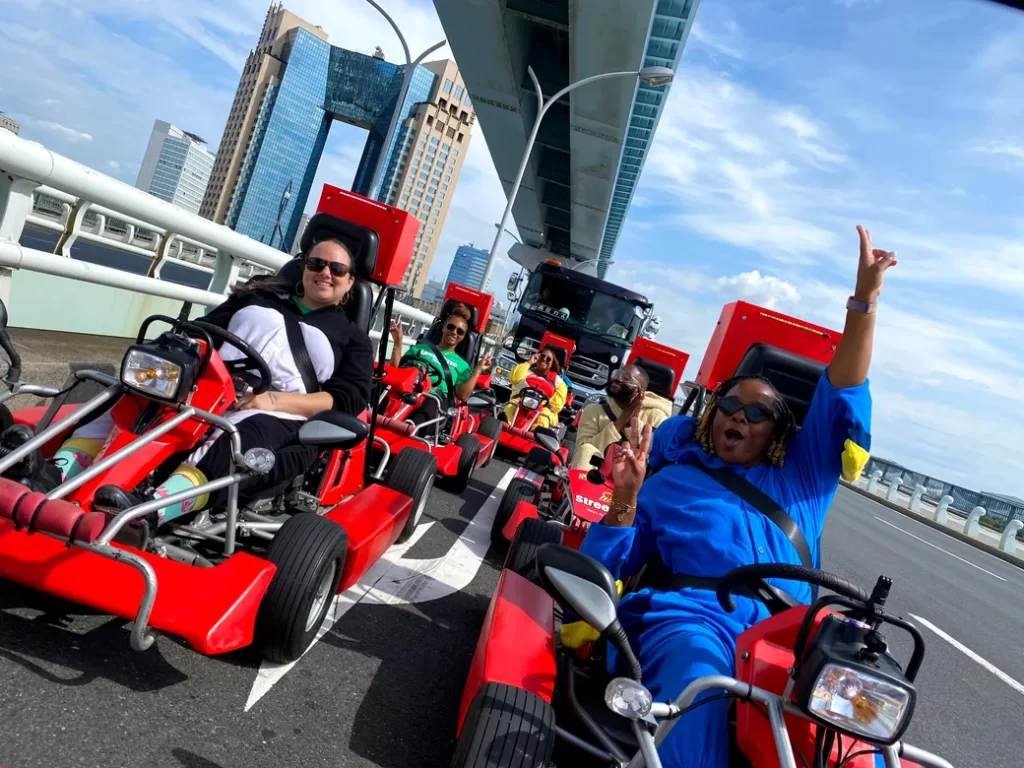
A street kart experience isn’t simply transportation to get you to a destination—it’s easy to incorporate as time spent experiencing Tokyo’s urban scenery itself. You can check official information on the Street Kart official site. In this article, we’ll take a measured, objective look at how well February in Tokyo pairs with the Valentine season, and how naturally a street kart experience can be combined with winter sightseeing in Tokyo.
Tokyo’s February Valentine Charm Lies in the Winter Air and the City’s Expression
February in Tokyo has a quiet charm that differs from both the brilliance of spring and the bustle of year-end. The air tends to be dry during the day, and on days when visibility is relatively clear, you can easily see the glass faces of buildings, the branching of roadside trees, and the depth at each intersection. As night falls, signs, car lights, and the illumination of commercial facilities stand out distinctly, transforming the scenery into a wintry landscape with defined contours.
The Valentine season adds soft color to this winter city. Special venues in department stores, displays around stations, seasonal product offerings—it’s a time when reasons to walk through the city naturally multiply. Even without narrowing your sightseeing focus down to a single event, the seasonal mood spreads across the entire city, making it easy to build a satisfying stroll. That’s the hallmark of Tokyo’s February Valentine season.
Areas like Shibuya, Harajuku, and Omotesando in particular are places where the urban sense of speed and the seasonal staging are both easy to see at once. In Shibuya, the giant screens and the flow of people at the intersection create the city’s rhythm; in Harajuku, a playful spirit appears in the storefronts and the colors of the streets. Moving over to Omotesando, the orderly rows of roadside trees and architecture catch your eye, and the quality of the air feels different even within the same city center.
These differences become more striking when you view them as a line connecting them rather than as isolated points. In Tokyo sightseeing, people tend to visit famous spots one by one, but in February, there are sights worth seeing in the scenery along the way as you move from neighborhood to neighborhood. If you want to enjoy Tokyo during the Valentine season, it helps to plan not just your destinations but also the time spent traveling between them.
A Way of Looking at Adding a Street Kart Experience to Winter Tokyo Sightseeing
There are many ways to enjoy the streets of Tokyo, but a street kart experience has the distinctive quality of making the continuity of the city easy to feel. Even for areas that are far apart on foot, moving along the flow of the roads makes it easier to take in the changing cityscape as one continuous experience. Because it proceeds as a guide-led tour, it’s also easy to slot into your plans as a sightseeing activity.
The Street Kart official site provides information on multiple locations and courses across Tokyo. The Tokyo-area bases listed include Shinagawa, Akihabara #1, Akihabara #2, Shibuya, Shibuya Annex, Tokyo Bay, and Asakusa. For travelers, it’s a setup that makes it easy to consider your starting area based on your accommodation or your range of activity for the day. Since the accumulation of travel time tends to affect the impression of Tokyo sightseeing, where you begin your experience matters in practical terms as well.
For example, if you spend the daytime seeing Valentine-season events at department stores or commercial facilities, then add a street kart experience from evening into night, you’ll find it easier to sense how the appearance of Tokyo’s streets changes over time. During the bright hours, your eye is drawn to the architecture and the spread of the roads; after sunset, the lights and neon become the center of the impression. February in Tokyo is a season where that shift feels relatively dramatic.
Also, if you weight your itinerary entirely toward walking, winter temperatures and wind can sap more energy than you’d expect. That’s why how you position “time spent moving while taking in the city” within your overall sightseeing becomes important. A street kart experience is easy to include in your plans as a means of enjoying Tokyo’s scenery, and it can be an option that adds depth and dimension to a Tokyo trip around Valentine’s Day.
Feeling February’s Tokyo Around Shibuya, Harajuku, and Omotesando
When thinking about the atmosphere of Tokyo’s February Valentine season, the Shibuya–Harajuku–Omotesando area is a great match. Shibuya has a high urban density, and thanks to its intersection, large video screens, and the illumination of commercial facilities, its impression changes clearly between day and night. Harajuku is a place where the character of each street is easy to see, and where youthful sensibilities and seasonal staging readily appear on the surface of the city. Omotesando has its calm tree-lined avenue and beautiful architecture, and in the clear winter air, the orderliness of the landscape is easy to take in.
The appeal of this area lies in the fact that rather than each being an independent tourist spot, they are neighboring areas with different faces. Feel the city’s momentum in Shibuya, touch the light atmosphere in Harajuku, and see the well-ordered streets in Omotesando. This kind of flow creates a natural rise and fall in February sightseeing in Tokyo. The city’s Valentine-season staging, too, doesn’t dye everything one color—rather, it’s scattered across the city as expressions of individual shops and facilities, so it can leave a stronger impression when you take it in while on the move.
When combining a street kart experience with sightseeing in these areas, what matters isn’t only “what you see” but also “how you feel.” The streets of Tokyo aren’t made up solely of the famous views you’ve seen in photos. The sound of intersections, the wind passing between buildings, the changes in road width, the color temperature of the lighting—there are many elements you only notice once you’re there in person. In winter Tokyo, those differences are easy to perceive, and the contours of the city tend to stay in your memory.
How to Build a Tokyo February Valentine Day
When planning a February trip to Tokyo, designing the time from morning to night as a single flow makes it easier to take in the city’s charms. For example, if you spend the morning mainly at indoor facilities or commercial areas, stroll in the afternoon, and work in a street kart experience or night-view appreciation from evening onward, you can both cope with the cold more easily and enjoy the changes in scenery.
If you want to bring in the spirit of the Valentine season, the flow of touring the city center after viewing department store events or chocolate-related shopping floors pairs nicely. After feeling the season indoors, stepping out to see Tokyo’s streets while touching the cold outside air gives even a single day a sense of variation and rhythm. For readers searching with the keyword “Tokyo February Valentine,” showing “how to spend your time” rather than just “what to buy” tends to be more useful.
At this point, the key is not to let travel become mere empty time. February in Tokyo offers a different amount of visual information by day and by night. During the day, the composition of buildings and streets comes to the fore; at night, the beauty of light and reflection takes center stage. If you time a street kart experience to that transition, it becomes easier to enjoy comparing the two faces of Tokyo’s streets.
Of course, where you place the center of your itinerary varies from person to person. Some make shopping the main axis, while others prioritize photography or city walks. Within that, a street kart experience tends to function well as an intermediate point that links several sightseeing elements together. If you think of Tokyo’s winter scenery not just as something to “look at” but as time to “take in while moving,” it becomes easier to fit into a February itinerary.
Official Information to Check Before Booking
When considering a street kart experience, it’s important to check the official information rather than deciding based on the impression of an article alone. The place to confirm basic information is the Street Kart official site. Since courses, locations, booking availability, business hours, and meeting-point guidance may change, the appropriate approach is to check the latest information on the official site before your visit.
In particular, regarding the documents required to drive, please check the official driver’s license guidance page in advance. The reference is the official guidance on driver’s licenses. The official guidance indicates that the documents required to drive in Japan differ depending on your country or region and the type of license you hold. The conditions vary—a Japanese driver’s license, an International Driving Permit based on the 1949 Geneva Convention, SOFA-related documents, or, in some countries and regions, your home country’s license along with an official Japanese translation.
Also, the course guidance on the official site states that you cannot participate if you don’t bring the required original documents on the day. While traveling, there may be moments when you’re tempted to get by with just a copy or a saved image, but how you handle the required documents is something to confirm in advance. Don’t prepare based on guesswork here—it’s best to read the official guidance on driver’s licenses beforehand and decide accordingly.
Practical matters like clothing and meeting times shouldn’t be overlooked either. The official site posts guidance on arriving before your reserved time, as well as notes on footwear and clothing. Since there are days when temperatures drop in February in Tokyo, checking this together with your overall clothing plan for sightseeing will make it easier to move smoothly on the day.
A Way of Looking at It to Heighten the Experience’s Value in Winter Tokyo
To deepen the appeal of Tokyo’s February Valentine season, it’s effective to focus on how the city itself appears, rather than consuming seasonal events as one-offs. In winter Tokyo, the dryness of the air, the angle of the evening light, and the clarity of the night views all overlap, and there are days when the resolution of the urban landscape seems to rise. When you incorporate a street kart experience within that environment, it becomes easier to take in Tokyo’s streets not just visually but through the sense of movement.
During the Valentine season, even with the brilliant staging, the city as a whole isn’t excessively blended into one—each place has its own different sense of warmth. Shibuya’s bustle, Harajuku’s lightness, and Omotesando’s calm each carry an independent impression while naturally connecting within the same central area. That’s exactly why, to enjoy Tokyo’s winter, an itinerary that lets you feel the chain of neighborhoods suits better than sightseeing that’s complete at a single spot.
A street kart experience is one idea for sightseeing that lets you actually feel that “chain of neighborhoods.” While feeling the sense of distance and the flow of roads that you can’t fully capture on foot alone, you can take in Tokyo’s expressions in three dimensions. If you want to naturally enjoy both the atmosphere of the Valentine season and urban sightseeing on a February trip to Tokyo, it’s an option worth considering.
Summary
Precisely because February in Tokyo is a cold season, it’s a time when the city’s lights, contours, and the texture of the air tend to leave an impression. When the staging of the Valentine season is layered on top, a stroll through the city center becomes not mere transit but an experience of feeling the season. Tokyo’s popular areas, starting with Shibuya, Harajuku, and Omotesando, change their expression between day and night, and have a unique appeal as a winter destination.
Within all this, a street kart experience is easy to incorporate as a way to feel the streets of Tokyo as a line, and it’s a sightseeing element that readily adds movement and scenic variation to a February itinerary. For details and booking considerations, refer to the Street Kart official site, and check the documents required to drive in advance via the official guidance on driver’s licenses. When thinking about how to spend a Tokyo February Valentine season, planning the city’s atmosphere together with the travel experience makes it easier to savor the essence of winter Tokyo more carefully.
At our shop, out of respect for intellectual property rights, we do not rent out character costumes that may infringe on the rights of third parties. To ensure you can enjoy our service with peace of mind, we offer only costumes that take rights matters into consideration. For details, please check the Street Kart official site.
Information About Costumes
At our shop, we do not rent out costumes related to Nintendo or “Mario Kart.” We offer only costumes that take intellectual property rights into consideration.

